Categories
Education101

Village Project Top 10 Takeaways

Since early October, I have been blessed with the opportunity to work with the kids in the YMCA afterschool program at Howe Elementary School in Green Bay two times per week. It has been a very impactful and informational experience and has had many takeaways throughout it. Listed below are my top 10 takeaways from this experience:

  1. My biggest and most important takeaway from village project so far is that even though kids can be challenging to work with sometimes, it is still my passion to work with them and help them become better students and better people 
  2. Just because a child can’t entirely or perfectly complete a task, it doesn’t mean they haven’t shown or won’t show growth 
  3. Children from different parts of the state, even if they’re not that far apart, can show very different behaviors, both for the better and the worse 
  4. Little things such as going out of your way to talk to them can go a long way
  5. Children are very observant of your actions
  6. Children know of a lot of adult-like (oftentimes inappropriate) things, so it’s important to be aware of it and stress to them that it doesn’t belong in the classroom 
  7. It can be very difficult to get some kids to listen, so it is important to continue trying to get your point across to them and use different tactics to grab their attention 
  8. This experience has put into perspective how some kids are grateful for the smallest things that I sometimes took for granted as a kid 
  9. All children are good deep down, it just takes longer to see it in certain kids than others sometimes 
  10. I have also taken away that kids do a lot of things that they aren’t even aware of themselves, so it’s important to point it out to them to make sure they become aware of it, especially if it’s a negative behavior  
Categories
Education101

What I Can Do For The Common Good As An Educator

As an educator, I aspire to do a variety of different things for the common good. I believe a crucial step of this process is inspiring a shared vision amongst my students. This process involves a couple of steps. First and foremost, if I want to inspire a vision in my students that I want them to see, I, of course, have to implement an appropriate vision. I have to try and inspire them into things that will be highly beneficial for them in their futures, such as respect, responsibility, honesty, kindness, accountability, and many others. So, the first step of this process is laying out what these concepts are in the vision that I have. The next step of this process is modeling these concepts to my students. My students won’t be and shouldn’t be expected to learn things from me if I don’t demonstrate them myself. Living out these common good characteristics daily will expedite the process of learning these concepts. And lastly, once my students are aware of these concepts, I have been modeling them and they are starting to act upon them, they must continue to be reminded of what the visions are and why they are important. This is significant because if they don’t understand the importance of the vision, or they start to lose sight of the importance of the vision, you will lose the focus and attention of the students. It would be important for me to remind them and hold them accountable to help them continue to promote their growth. 

Another important thing that I can do for the common good as an educator is to put the needs of my students before my needs. The best leaders in the world, regardless of what they do, put others before themselves. Regardless of what is going on in my life outside of teaching (unless it’s something extreme, of course), I need to find a way to push through the days when I don’t feel like giving my students my very best effort and attention because of outside stressors and situations. If I were to not give the students my best effort and attention, they would not be getting the most out of their time in the classroom, and it would be because of a factor outside of their control. It is important to understand that, without putting your well-being to the side, the students are the top priority. You have to put them first because they are counting on you to lead them, to teach them, to guide them. They are trusting you and counting on you, so you must fight hard and dig deep every single day to give them your very best. 

Another thing that I can do for the common good as a teacher is the important concept of meeting the students where they are. A significant aspect of the common good is making sure what you’re doing is beneficial to everyone in the group, or in this case, the classroom. This is a challenge, mainly because there is a different path for all of the students in your classroom to accomplish this. To do this, I will challenge myself to get to know each kid personally and on a deep level to know who they are and how they prefer to operate; what learning tactics and strategies work best for them to learn and have fun while doing it. Knowing this information will be essential to meeting them and their learning where they’re at. Being intentional about building relationships with them and getting to know them better is the central part of meeting them where they are. You can’t meet them where they are if you don’t know where they are to begin with. 

All in all, doing things for the common good as an educator takes time, hard work, and getting well out of your comfort zone. At the end of the day, it all comes down to the students and making sure that they are getting the most out of their educational experience. It is important to communicate well with your students to get all of them on a shared inspired vision and to make sure that you meet all of them where they’re at so they get what’s best for them. These students are counting on you to lead them and educate them each and every day. 

Categories
Education101

What I’m Both Excited For and Worried About With Becoming A Teacher

I certainly have both feelings about becoming a teacher, although more of it is definitely more excitement. What excites me and motivates me the most about becoming a teacher is the idea that I will have the ability to have such a great impact on the future of the world. I can not only give them the education by teaching them subjects that will be essential for their future, but also by being a role model for them by displaying proper community values such as respect, honesty, responsibility and kindness. The idea of being able to do this and model this for hundreds and hundreds of kids knowing that I could be an impactful figure in their lives is so exciting to me. I get to, for a short period in the lives of many kids, give them everything I can, both academically and with life skills as well, to help make their lives better. Some students out there might not have other figures in their lives who are able to give them the knowledge in order to have these skills to set them up to be successful in the future. If I can make the most of this opportunity to get a grasp of these kids, especially the ones that maybe don’t get as much love or attention at home from parents or guardians. If I can be a significant difference maker in the lives of all kids, and the kids with lives like those especially, I will make such a great impact on them and I just might be the person that, if they lack that impactful figure or those figures, can be that person in their life and maybe even change their lives around if the path they’re headed down isn’t the greatest. The thought of getting the opportunity to do this is very exciting for me; knowing that I will be able to make a difference in the lives of human beings that are quickly changing and in a crucial stage of their human development. Knowing that I will have the potential to make a positive difference in the lives of others is what excites me the most about getting into this profession. 

Although I am very excited to jump into the teaching world, there are a few particular things that slightly concern me, and one is the ability to maintain control of a classroom full of kids. Obviously, I will be only one adult trying to handle a classroom of probably 25 or 30 students; I will be significantly outnumbered. I feel as though I will have such a deep care for my students, but once I struggle to maintain the control of all their emotions and behaviors at once, I feel like I will become frustrated with myself, so this is something that I will have to learn to handle the proper way. I feel as though I am also slightly worried in the sense that I will struggle with being able to connect with my students in the ways appropriate for each one of them to get the most out of their learning. I feel like I will be able to connect with some of the students and they will learn well, but there will also be some that I won’t be able to connect with. Of course, this will be an issue, because the main objective of being a teacher and a leader for your students is making sure that you meet every single one of their needs so they learn and consume what information they need to consume. I’m just slightly worried if I will be able to handle so many needs at once considering there is only one of me and a lot more than one student. It is a lot for one person to handle but certainly a challenge that must be accepted if you want to succeed in this profession. I know that it is a challenge that I am willing to accept because I have such a deep passion for having a positive impact on the future of society.

Categories
Education101

What My Teacher Interview Told Me About Being An Impactful Teacher

There were several points that I took away from my interview that are instrumental in being an impactful teacher. First and foremost, the one that hit home a lot for me was the fact that to be impactful, you must have a constant wanting to learn for several reasons. One of those comes from a great point that the teacher I interviewed stated: “You wouldn’t trust a doctor if they hadn’t learned a single thing since they graduated, would you?” The same concept applies to teaching. Regardless of how long you’ve been teaching, it’s one of those professions where you will not be perfect, certainly not on the first day, week, month, year, and most likely after many years. So, if you learn nothing, or very little, that’s a red flag that you aren’t maximizing your potential as a teacher and you probably need to view your experiences differently, and perhaps you need to ask more questions and look for more growth opportunities. That’s something that this teacher drove at, is that you must constantly be wanting to learn more. It can be seen in professions of all kinds; those who are the best at what they do are always learning. Another concept my teacher drove at was the idea of “your learning for theirs.” The point she was trying to make here was that as an impactful teacher, you should want to learn more so that your students can be better in the classroom and outside the classroom as well. This is important because, at the end of the day, this profession revolves a lot around the kids. A major reason why people get into this field is because of the kids. It is very important to understand that the work you put into this will have a significant impact on the students in your classroom. You should have a high desire and a sense of urgency to learn so your students can be the best versions of themselves, both inside the classroom and outside.

Another thing I realized impactful teachers do after reflecting upon my teacher interview is that they work very hard to build relationships with their students. They try hard to get to know them as people. An impactful teacher does this so they can relate better to their students and it makes the students feel good because they now have this feeling of, “Wow, the teacher must care about me because they are talking to me about things that I like.” This helps build the character and reputation of the teacher to make them a more impactful figure in the eyes of the students. One concept that my teacher laid out for me was that some kids on the outside seem a lot different than who they are. They might seem down, angry, or disinterested in anything else going on outside of them. But, when you try to get to know them better as a person and who they are, this is when you can see who this student is. You can see the real side of them. You get this out of the students because you took the time to be intentional about getting to know them better on a personal level.

A third idea that was driven home with me by my teacher was the idea that passion about what you are teaching will naturally make you more impactful. Whether that’s a specific content area or multiple content areas, having a passion for what you teach will make you impactful because you care about that content. Also, if you are passionate about what you are teaching, this will mean that there is a better chance the students can feed off of that passion and enthusiasm too, meaning that their learning will be enhanced as well. Passion is a driver across all professions and fields. If you are passionate about what you are doing, this will automatically increase your performance and productivity, because it is something you truly and deeply care about. Doing something that you don’t have as much passion for means you won’t be as motivated to learn more and ask questions about the content. Ultimately, this leads to undesirable performance and productivity levels. Passion in the field of education is important because as a teacher, you are essentially educating the future of America. You hold the ability to have a direct impact on the future of the country. If you truly want to get the best out of students, want what’s best for each of them, and care about them deeply on a personal level, the passion for this will be directly reflected in the students.

All in all, a combination of these ideas was what I thought to be the main points of being an impactful teacher driven by my teacher interview. I think that in short, it comes down to caring about what you’re doing and wanting to learn more. It is a very simple concept but hard to act upon every day.

Categories
Education101

Takeaways From Wisconsin Schools Project

This project pushed me to understand how schools in different areas of the state face a variety of issues from socioeconomic struggles, academic struggles and a diverse population. The district I grew up attending and graduated from, the Kimberly Area School District, had very few of these issues and challenges. That’s not to say that everything was perfect, but certainly different in the sense that these different challenges and issues were not as present. Kimberly’s population is made up of almost 90% white students, with about 15%-20% of the total population being socioeconomically disadvantaged, and a majority of the population meeting or exceeding academic expectations. When this is the environment I grew up in, I begin to think that all or most schools will be something like this or at least similar. When I went into this project studying the Milwaukee area south of I-94, I knew that it would certainly be different than a district like Kimberly. However, I did not think it was going to be as different as it was. The pie chart below represents the racial and ethnical divide across public schools specifically in the West Allis area of Milwaukee:

While this district still has the highest percentage of white students, there is still a rather fair percentage of students coming from other ethnicities. With populations of this diversity level, it is difficult to supply staff members that are able to reflect the backgrounds of these students. There are also the social struggles with students of different backgrounds wondering if they fit in, if they are different from everyone else, etc. The work I did with this project really brought issues like that to light for me, partly because I came from a district where diversity was not an issue, as a vast majority of the students were white. And it brings to light that this is not just a challenge in this district, but there is a great chance that it is seen in other districts as well.

The ethnic and racial diversity is not the only struggle in this district. Specifically in the West Allis district, almost 75% of the students came from economically challenged households. That means that almost 3 in every 4 students came from a low-income or financially struggling home. This also means that there is a great probability that some of these students might not even know where some of their upcoming meals are going to come from, if they will be able to always have clean clothes, and maybe even if they will certainly have a place to sleep that night. All of these stresses on a student of any age is almost certain to impact their performance in school, because all of these worries are happening in the back of their mind is going to be a distraction from their academic work. This was evident in the schools I studied in this project because some of them had below average test scores. I learned that this is also a major issue facing many students in America’s schools today, and is another obstacle in their way in trying to perform well academically.

All in all, this project certainly broadened my understand of what the issues are that students have to face. In my childhood and attending school over the years, I didn’t see many of these issues and when I did see them they weren’t heavily present. I wasn’t exposed to what these issues and challenges looked like, but at least now through my work with this project that they are here and they have a major impact on students. It has opened my eyes up to reality and that school districts such as the one I grew up in is not the norm.

Categories
Education101

EdTalk Project Reflection

Between my own book and the books that my classmates read, this project helped me gain an understanding of the many different things that children in America can experience, as well as the different backgrounds they come from with their home lives. I learned that it can be something different with every child. Just because one child isn’t experiencing something that another child is, doesn’t mean that one child isn’t experiencing something different of their own. For example, the main character in the book I read, Jude, had a pretty good relationship with her family, and they seemed to be big supporters of hers with whatever it was. When we look at the lives of other kids from different books, some of them did have very rough lives at home. Whether it was abuse, lack of support or socioeconomic struggles, children in other books had some of those issues that would have a direct impact on their performance and/or behaviors in school. Jude might not have had these problems, but she had problems of her own. Coming from Syria to the United States, she was completely unfamiliar first and foremost with English. As a foreign exchange student this is one of their greatest challenges to bear, is trying to get familiar with the new language. Jude also had the stress of worrying about looking different from everyone else, especially when it came to wearing her hijab, which is a part of her culture back home. This really made her stand out from the crowd. This is just one of many examples of how different students can be facing different issues in their lives, but this project really opened my eyes as to how the problems are different from student to student. It is important to be aware of all these different problems students can face.

As a future teacher, I will apply this to my work by having an increased awareness of the different issues kids in my classroom are facing. What I have learned from this project tells me that it could be something different from each child. Each child has their own unique abilities and experiences, and as a teacher in a room full of all these kids, I have to be able to recognize the skills and abilities that each one of them has and get them to be able to utilize those in the classroom. It is likewise with recognizing their different struggles and issues. This project has helped me understand that different kids come from different situations, and it is a challenge to face as a teacher to accommodate all of those need, but important to try as hard as possible to complete that challenge. All in all, when I am a teacher in the future, I will work as hard as possible to meet the needs of all my students and lower their stresses from the problems they face outside of the classroom.

Categories
Education101

The History of Catholic Education In America

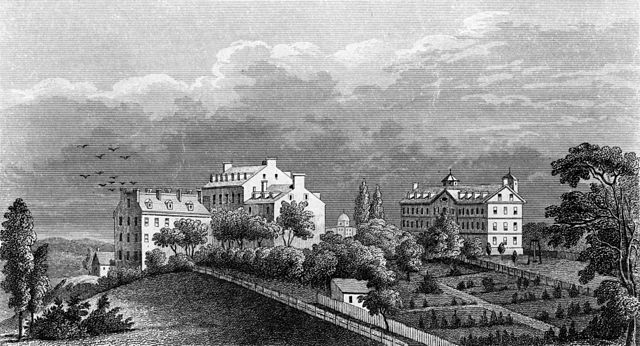
Catholic Education in America had already been a strong point of society by the time the first Catholic school was established in 1606. It was founded by the Franciscan order in present-day St. Augustine, Florida, and it would start small like this but eventually spread slowly over the United States for the next century. It was after the Revolution when it really started to blossom. Just a few years after the war ended, in 1789, the first Catholic college in the United States was founded as Georgetown in present-day Washington DC. Two years later, there was the ratification of the bill of rights, and with it the first amendment would guarantee freedom of religion. This would help Catholics further cement their place in this new country.

Georgetown is now the oldest Catholic university and is one of the most prestigious colleges in the nation. Over the next few decades, Catholic schools would be established in several other states including Maryland and Kentucky. Mass immigration from Catholic Ireland in the mid-1800s caused an increase in demand for religious education and many private Catholic schools were founded during this period as an answer to the Protestant education that then dominated the nation’s public schools. By 1900, there was an estimated 3500 in the United States reaching all age groups.

Georgetown University in 1850

The growth of Catholic education over the course of time is very interesting because of how small it started, and with such limited resources, but it still grew very well. It is not easy for something to start, grow, and become very successful, especially in a time period where there wasn’t an abundance of resources or anything like that. I was surprised to see how dominant protestant-based schools were and how Catholics were able to assert some dominance of their own even with the success of the protestants. As I look at society today, it is an essential opportunity for kids and their families to have to be educated through a catholic school. So all in all, I found it very interesting and surprising how much it was able to grow and expand over the years, and how they were able to overcome the competition from other religions to have plenty of their own success. It is very important because millions of students in today’s age have the opportunity the be educated from a Catholic school and get a lot from their experiences.

Categories
Education101

Reflection 1: Meet Them Where They Are

Through my personal experiences, the phrase “meet them where they are” refers to the idea that children learn in different ways, and there is no “one size fits all”. A method that might work for one student might not work for the next student, and likewise for the following student, so on and so forth. For example, through my time volunteering in a 4th grade classroom during my senior year of high school, I observed that when the teacher would instruct lessons, for example during reading and writing time, they would be learning new vocabulary of things observed in literature, but not all of the students would understand. Some would have looks of confusion on their face, and some would raise their hand when the teacher asked them for examples of what they were talking about. If what the student said was incorrect, or not exactly what the teacher was looking for, she would say something like, “not quite. But, good try.” And if any of the other students would laugh or make fun of that student for not getting it right, they were confronted immediately by the teacher. So, what I learned when I observed this is that the teacher would describe terminology or some vocabulary in a fashion that some but not all students would understand, but she would not make them feel bad for not understanding, and additionally, explain to them what it meant in a way that they did understand. She would meet them where they were in terms of what their current understanding was.

Another way in which the phrase “meet them where they are” can be observed is the fact that all students are at different levels in terms of their knowledge of different content areas. I would argue that generally speaking, students fall into 3 main categories; below sufficient, sufficient, or above average/ excelling. It means in no way, shape or form that the students who fall into the below average or average categories are “less” or “not as good” as the students who are above and beyond. Again, it means nothing bad, it’s just the way it is. Each student was put on this earth with different skills, abilities and learning styles/levels. Just because a student isn’t there yet doesn’t mean they will never get there. A way in which I observed this was also in high school, when I mentored a 6th grade boy whose family had just moved from Mexico. He spoke little English and was behind in almost every subject in school. I worked with him for about 70 minutes two times per week, helping him with his subjects and also teaching him some English. What I learned about this boy is that his work ethic and determination were not the problem. He came with me to the library every day with a good attitude, ready to learn and ready to work hard. Over the 3 month time in which I worked with him, he made tremendous progress in not only his learning, but how he was able to socialize with me and other people in the building. He just wasn’t there yet, but with his work ethic and good attitude, he will get to where he needs to be.  All in all, what this idea means to me is that each student is unique in their own way. Not just how much they know, but the way in which they got there. It is different with every student. As an educator, it is crucial to understand the differences in each student and figure out the ways to get each student to learn the best. Each student. Not giving one or two students this effort isn’t good enough; I will need to figure out the best methods with each student. Especially being as though I plan to teach younger kids, this is a part of their lives where they are changing the most. These students will need me to meet them where they are at in order to ensure they maximize their learning and grow to be the best version of themselves.

css.php